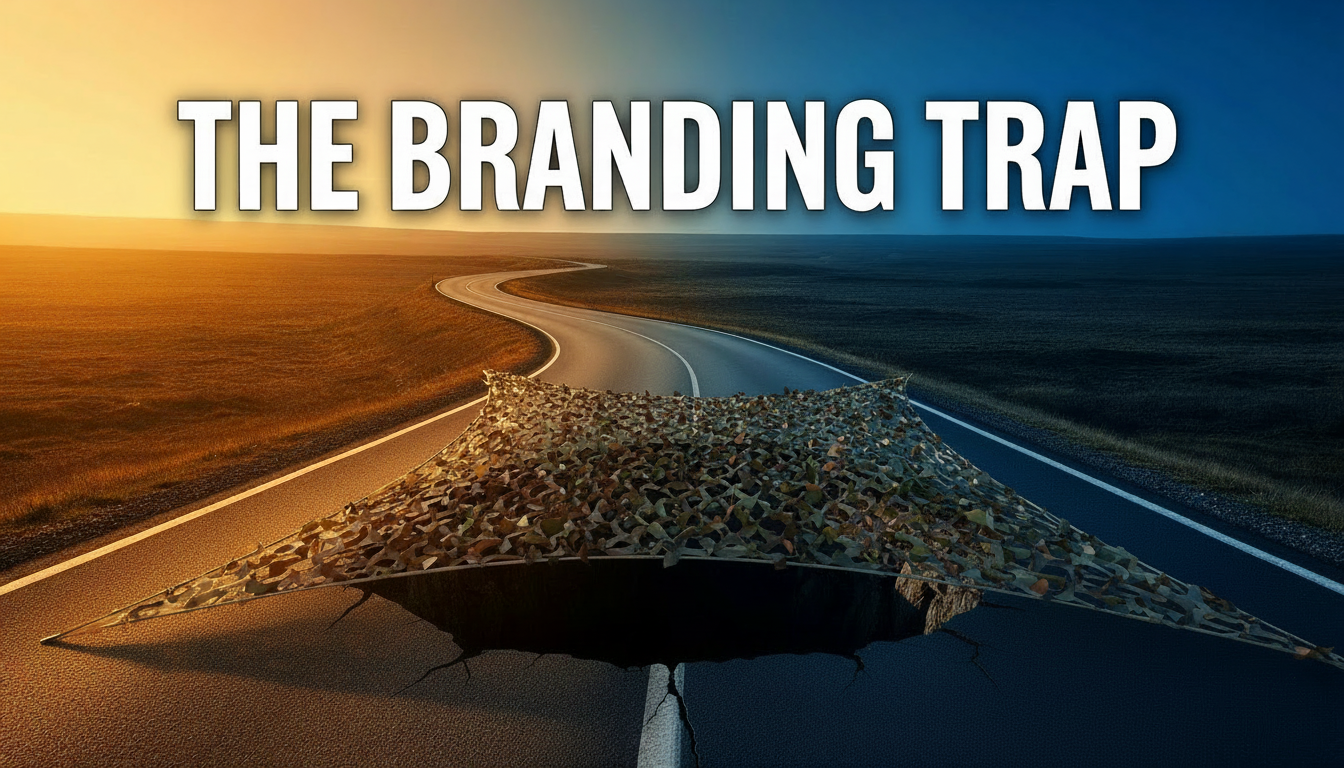
The real issue starts before the project begins
The core mistake is structural, not creative.
The company launches a branding and marketing strategy project without internal ownership of marketing decisions.
No VP Marketing.
No Head of Marketing.
No one accountable for outcomes.
Responsibility defaults to the CEO.
The CEO is smart, committed, and deeply familiar with the product.
But they are also overloaded and pulled in multiple directions.
Most importantly, they are closest to what the company wants to be, not to how the market actually experiences it.
That gap is where branding projects quietly break.
What agencies can do and what they cannot
A good agency can research the market, ask sharp questions, craft narratives, and translate strategy into assets.
But an agency cannot choose priorities, resolve internal disagreements, or define what success actually means for the business.
Without clear ownership, agencies are asked to execute and decide at the same time.
That is not execution.
That is delegation of responsibility.
The internal owner does not need to be a marketer
This is often misunderstood.
The internal owner of a branding and marketing strategy project does not need to be a marketing professional.
In many companies, there is no marketing persona at all.
That is exactly why the project exists.
What is required is an internal leader who can hold decisions over time, represent company priorities, and translate strategic intent into organizational reality.
This role is often filled by a VP HR, a COO, or another senior leader trusted by the CEO.
But even that is not enough on its own.
Why the fractional CMO is the critical force in the middle
This is where projects either succeed or collapse.
The fractional CMO does far more than connect the company and the agency.
They define what the project is actually meant to achieve.
They set goals that go beyond deliverables and focus on outcomes.
They turn abstract ambition into measurable progress.
In practice, the fractional CMO:
Translates business objectives into clear strategic direction
Refines agency output so it aligns with reality, not theory
Balances internal constraints with external perspective
Extracts the best thinking from both the company and the agency
Maintains consistency across time, not just across presentations
The fractional CMO is the one who ensures the project produces clarity, not just content.
Without this leadership, agencies are exposed to unfiltered internal tension and shifting expectations.
Companies receive polished work that does not fully land.
The predictable failure pattern
When this structure is missing, the same sequence unfolds:
- 1
The agency presents a direction
- 2
Leadership is partially aligned but hesitant
- 3
Sales pushes back
- 4
Product raises accuracy concerns
- 5
Feedback becomes fragmented
- 6
Decisions stall
- 7
The message loses sharpness
- 8
Trust erodes
From the outside, it looks like weak agency delivery.
From the inside, the system never allowed clarity to form.
Why agencies end up taking the blame
When no one owns outcomes internally, accountability disappears.
The agency becomes "marketing" by default.
When expectations are not met, it becomes the easiest place to assign blame.
This avoids a harder question.
Were we actually ready for this project?
In many cases, the answer is no.
Branding is not a starting point
Strong branding is not created in isolation.
It is the result of strategic decisions.
It reflects focus, tradeoffs, and alignment across leadership, product, and sales.
These are management decisions.
Creative work only makes them visible.
Without someone owning these decisions and refining them continuously, branding becomes theoretical.
Thoughtful, polished, and disconnected from reality.
What actually works
Across many projects, three elements consistently lead to success:
- 1
An internal leader with influence and continuity
- 2
A fractional CMO who owns goals, outcomes, and refinement
- 3
An agency focused on execution within clear strategic boundaries
When this structure exists, agencies do their best work and companies see real change.
When it does not, even strong agencies struggle.
The bottom line
Most failed branding projects are not creative failures.
They are structural failures.
Launching a branding and marketing strategy project without clear ownership and strategic leadership is not a risk.
It is a predictable path to disappointment.
And blaming the agency afterward is often just a way to avoid confronting what was missing inside the company.
Ready to set your next branding project up for success?
If you are planning a branding or marketing strategy project and want to build the right structure from the start, let's discuss how fractional CMO leadership can bridge the gap between your team and your agency.